
Fallout 3

Fallout 3

Genre: Role-playing (RPG), Shooter

Platforms: PC (Microsoft Windows), PlayStation 3, Xbox 360

Franchise: Fallout

Game Information

  • Release Year: 2008
  • Type: Main game
  • Developer: Bethesda Game Studios
  • Publisher: Bethesda Softworks
  • Engine: Gamebryo
  • Platforms: PlayStation 3, PC (Microsoft Windows), Xbox 360
  • Official Website: Visit Website

Overview

Fallout 3 is an open-world action role-playing game developed by Bethesda Game Studios and published by Bethesda Softworks in 2008. It marked the first entry in the Fallout series to shift the franchise from its original isometric, turn-based roots into a fully three-dimensional, real-time experience driven by Bethesda’s Gamebryo engine, the same technology that powered The Elder Scrolls IV: Oblivion two years earlier.

Set in the Capital Wasteland, the irradiated ruins of Washington D.C. and its surrounding suburbs roughly two hundred years after a global nuclear war, the game casts the player as the Lone Wanderer, a vault-born protagonist who ventures to the surface in search of their missing father. What begins as a personal quest quickly expands into a struggle over the future of the wasteland itself, involving military factions, irradiated mutants, and a centuries-old effort to restore clean water to the region.

As the third numbered entry in the franchise and the first developed under Bethesda’s stewardship, Fallout 3 is widely regarded as a pivotal moment for the series. It reintroduced Fallout to a mainstream audience more than a decade after Fallout 2, reestablishing the post-apocalyptic setting, the retro-futuristic aesthetic, and the moral ambiguity that had defined the earlier Interplay-era games, while transposing all of it into the first-person exploration-driven template Bethesda had refined through Morrowind and Oblivion. Its influence is still visible in virtually every open-world RPG released since.
Gameplay

Fallout 3 is played primarily from a first-person perspective, with a seamless option to switch to third-person at any time. The player explores the Capital Wasteland on foot, entering ruined buildings, underground metro tunnels, military installations, and small settlements without loading screens inside most contiguous spaces. Combat can be executed in real-time using conventional shooter controls, but the game’s defining mechanic is VATS, the Vault-Tec Assisted Targeting System.

VATS pauses the action and allows the player to spend action points to queue up targeted attacks on specific body parts of an enemy: head, torso, limbs, or weapon. Each shot is calculated as a hit-chance percentage based on distance, weapon condition, and the player’s relevant skill. Successful attacks play out in a cinematic slow-motion sequence. The system effectively bridges the turn-based combat of the earlier Fallout games with modern real-time first-person shooting, and remains one of the most recognizable elements of the series.

Character progression is built on the SPECIAL system, an attribute framework introduced in the original Fallout. Seven primary attributes, Strength, Perception, Endurance, Charisma, Intelligence, Agility, and Luck, determine the base effectiveness of every skill and action. On top of this, the player distributes points into thirteen skills at each level-up and selects a perk that grants a passive bonus or unlocks new options. Skills govern everything from weapon handling to lockpicking, hacking terminals, bartering, and convincing NPCs in dialogue.

The game incorporates a karma system that tracks the moral weight of the player’s choices. Stealing, murder, and cruelty lower karma; acts of generosity and mercy raise it. Karma influences how certain NPCs react to the player and which companions are willing to travel with them. Beyond combat and dialogue, the player can scavenge weapons, armor, ammunition, food, medical supplies, and crafting components from virtually every environment, repair equipment by cannibalizing duplicates, and carry a limited inventory constrained by weight.

Story

The player takes the role of the Lone Wanderer, a character born inside Vault 101, one of the hundreds of underground shelters built by the pre-war Vault-Tec corporation to preserve a portion of humanity through nuclear holocaust. Unlike most Fallout protagonists, the Lone Wanderer’s early life is experienced directly: the game opens with the character’s birth, continues through childhood and adolescence inside the vault, and only later transitions to the open wasteland.

The story begins in earnest when the protagonist’s father, a scientist named James, leaves Vault 101 under mysterious circumstances. The vault’s overseer blames James’s disappearance on the protagonist and orders them detained. The Lone Wanderer escapes to the surface for the first time in their life and sets out across the Capital Wasteland to find their father and understand why he left.

The search leads the player through the fractured remnants of post-war society: the struggling frontier town of Megaton, built around an unexploded atomic bomb; the walled settlement of Rivet City, housed in a decommissioned aircraft carrier; and the radio broadcasts of the enigmatic Three Dog, whose Galaxy News Radio station becomes a narrative anchor for the wasteland’s events. As James’s trail becomes clearer, the story reveals his involvement in Project Purity, an ambitious pre-war scientific effort to produce clean, drinkable water on a mass scale by purifying the irradiated Potomac River.

The central conflict emerges when the Enclave, a militarized remnant of the pre-war United States government, arrives in the Capital Wasteland intent on seizing Project Purity for their own agenda. Opposing them is the Brotherhood of Steel, a techno-religious order dedicated to reclaiming and preserving advanced technology. The Lone Wanderer is pulled into this conflict and ultimately must decide how, and for whom, the purifier will be activated. The ending depends on the player’s choices throughout the campaign, their karma, and the faction allegiances they have built.

World and Setting

The Capital Wasteland is the game’s central setting: a sprawling region built around the ruins of Washington D.C. and the surrounding Maryland and Virginia suburbs, rendered roughly two centuries after the nuclear exchange of 2077. The landscape is defined by collapsed highways, rusted car wrecks, bombed-out office blocks, and the skeletal remains of iconic American landmarks, the Washington Monument, the Capitol building, the Jefferson Memorial, and the Lincoln Memorial all appear as explorable locations, each in varying states of ruin and occupation.

The wasteland is loosely divided between the destroyed urban core of D.C., the open suburban sprawl to the north and west, and specialized enclosed areas such as vaults, military bunkers, and pre-war factories. The D.C. ruins are navigated in large part through the remnants of the Washington Metro system, a network of collapsed and irradiated subway tunnels that the player must traverse to move between surface districts.

The region is populated by a broad range of factions and creatures. Scavengers and raiders have carved out territory in the ruins, organized under warlords or loose banditry. Super mutants, the towering, green-skinned products of a pre-war virus experiment, roam the city in war bands. Ghouls, humans mutated into long-lived radiation-immune forms, live in isolated communities such as the Underworld, a ghoul enclave housed inside the Museum of Natural History. Wildlife has been transformed by radiation into mole rats, giant radscorpions, yao guai, and the irradiated cattle known as brahmin.

Layered beneath all of this is the pre-war history of the United States as imagined by the Fallout series: a mid-twentieth-century retrofuturism in which the atomic age never ended, consumer culture absorbed military technology, and the aesthetics of 1950s Americana persisted into a world of robot butlers, vacuum-tube computers, and nuclear-powered cars. Every terminal, poster, and skeleton tells part of the story of how this world came to an end.

Development

Development of Fallout 3 began in 2004, shortly after Bethesda Softworks acquired the Fallout license from the bankrupt Interplay Entertainment. The studio had just finished work on The Elder Scrolls III: Morrowind and was moving toward Oblivion; Fallout 3 was conceived from the start as a project that would use and extend the technology of Bethesda’s next-generation Elder Scrolls engine. Todd Howard served as executive producer and director, with Emil Pagliarulo as lead designer and writer.

The fundamental design question Bethesda faced was how to bring a franchise defined by isometric perspective, pause-based combat, and turn-based tactics into a modern three-dimensional template without losing its identity. The answer was a hybrid: real-time first-person movement and shooting, combined with the VATS targeting system, which preserved the body-part-specific, percentage-driven feel of Fallout’s original combat inside a contemporary interface. The SPECIAL character system, perks, skills, and the karma mechanic were carried over directly from the earlier games.

The game was built on the Gamebryo engine, heavily modified from the version used for Oblivion. Bethesda commissioned a custom lighting and atmosphere rendering pass to produce the distinctive greenish-brown tint of the Capital Wasteland and spent considerable effort on hand-placed environmental storytelling, skeletons posed in meaningful ways, abandoned notes, and computer terminals that could be read for backstory. The soundtrack combined an original orchestral score by composer Inon Zur with a curated selection of licensed pre-war music from the 1940s and 1950s, played diegetically through in-game radio stations.

The decision to set the game in Washington D.C. was made relatively early and influenced both the game’s political themes and its physical construction: the real-world geography of the District, its monuments, and its metro system all became load-bearing elements of level design. Bethesda scouted the city and photographed landmarks for reference, rebuilding them in ruined form for the final game.

DLC and Expansions

Fallout 3 received five downloadable content expansions following its 2008 release, each adding a self-contained questline and, in some cases, expanding the post-campaign experience. Together the expansions were later bundled with the base game as Fallout 3: Game of the Year Edition.

**Operation: Anchorage** takes the player inside a pre-war military simulation of the Battle of Anchorage, the historical event that opened the Sino-American War in the Fallout timeline. It is a more linear and combat-focused experience than the base game, playing much like a traditional shooter campaign with stealth elements and rewarding the player with a cache of unique power armor and weapons.

**The Pitt** sends the player to the ruins of Pittsburgh, now a fortified industrial town ruled by raiders and built around a resurgent steel mill. The expansion centers on a morally ambiguous conflict between slaves and slavers, and includes a prolonged central choice that has no clean resolution.

**Broken Steel** is the largest and most structurally significant of the expansions. It raises the level cap from 20 to 30, adds new perks, and most importantly removes the base game’s original hard ending, allowing the player to continue exploring the wasteland and engaging with new questlines after the main story concludes.

**Point Lookout** takes the player to a swampy, decaying coastal region of Maryland, introducing a new area physically separate from the Capital Wasteland. It is the most exploration-driven expansion and is notable for its atmosphere, its new enemy types, and its emphasis on environmental storytelling.

**Mothership Zeta** is the most tonally unusual expansion: the player is abducted by aliens and must fight their way through a flying saucer in orbit above Earth. It leans heavily into the pulp science-fiction side of Fallout’s retrofuturism.

Reception

Fallout 3 was received as a major achievement at release, broadly praised as one of the defining role-playing games of its generation. Critics highlighted the scope and density of the Capital Wasteland, the strength of Bethesda’s environmental storytelling, the successful fusion of the franchise’s turn-based heritage with modern first-person gameplay through VATS, and the moral weight and branching consequences of the central questline.

The game drew particular attention for its tone. After nearly a decade of dormancy, Fallout returned as a mainstream title without abandoning the black humor, the moral complexity, or the retrofuturistic aesthetic that had defined the original games. Reviewers noted the density of side content, small, hand-authored vignettes scattered across the wasteland that often rewarded curiosity with some of the game’s most memorable moments.

Fallout 3 also generated discussion among long-time fans of the franchise, some of whom were skeptical of the transition from isometric tactics to first-person action. Debate centered on questions of faction writing, the depth of role-playing systems relative to the original games, and the treatment of established lore. These conversations continued for years and ultimately shaped how the subsequent entries in the series, particularly Fallout: New Vegas, were designed.

The game received widespread recognition across end-of-year awards in 2008 and 2009, including multiple Game of the Year honors from major publications and industry bodies. It was commercially successful on all three of its launch platforms, reaching a broad audience that extended well beyond the pre-existing Fallout fanbase and cementing Bethesda’s position as a leading developer of open-world role-playing games.

Modding Community

Fallout 3 has one of the most active and long-running modding communities in PC gaming. Bethesda released the Garden of Eden Creation Kit, known as the GECK, shortly after launch, giving players direct access to the same internal tools used by the developers. The GECK enables the creation and modification of quests, characters, items, locations, scripts, and entire new worldspaces, and it is structurally similar to the Creation Kit used for The Elder Scrolls V: Skyrim, which allowed modding skills to transfer easily between the two games.

The community has produced an enormous range of mods over the years. These include bug fixes and unofficial patches that address issues left unresolved in the base game, graphical overhauls that replace textures and lighting with higher-resolution alternatives, gameplay rebalancing mods that adjust the economy or combat, new weapons and armor, new companions, and entirely new questlines. Some of the largest community projects are effectively standalone games in their own right, such as total conversion mods that rebuild unrelated post-apocalyptic settings using the Fallout 3 engine.

Most Fallout 3 mods are distributed through Nexus Mods, the community hub that has served as the main repository for Bethesda-game mods for over a decade. Mod managers such as Mod Organizer and the Nexus Mod Manager make it possible to install, configure, and reorder large numbers of mods without manually editing game files.

The community has also produced tools that extend the engine itself. The Fallout Script Extender (FOSE) gives modders access to engine functions that the base GECK does not expose, enabling more sophisticated scripting and gameplay changes. Even more than a decade after the game’s release, the Fallout 3 modding scene remains active, with new releases, maintained compatibility patches, and ongoing preservation work.

Legacy

Fallout 3 occupies an unusual position in the history of role-playing games: it is both the continuation of a legacy franchise and the founding entry of that franchise’s modern era. It reestablished Fallout as a commercially and critically viable series after nearly a decade in which the IP had been considered dormant or stalled, and it set the structural template that every subsequent main-line Fallout game would build on.

The game’s most durable contributions are conceptual. VATS, the hybrid real-time/turn-based targeting system, has been retained, refined, and reinterpreted in every numbered Fallout sequel. The environmental storytelling technique Bethesda refined in the Capital Wasteland, in which an encountered room or corpse silently tells a complete narrative through object placement, became a widely imitated convention in open-world design. The Pip-Boy interface, with its monochrome retrofuturistic aesthetic, has become the single most recognizable visual signature of the franchise.

The success of Fallout 3 also enabled Fallout: New Vegas two years later, developed by Obsidian Entertainment, a studio staffed in part by veterans of the original Interplay Fallout games. New Vegas used Fallout 3’s engine and mechanics as a foundation but returned to some of the denser faction writing and reactive role-playing of the earlier era, and in doing so shaped ongoing conversations about what a Fallout game should be. Fallout 4, Fallout 76, and the broader Fallout media franchise, including the live-action television adaptation, all ultimately trace their commercial viability back to Fallout 3.

Beyond the series itself, Fallout 3 helped establish the modern Western open-world RPG as a dominant commercial category. Its combination of a massive hand-authored world, branching quest design, voiced NPCs, moral choice systems, and heavy mod support provided a template that influenced a generation of games in the years that followed.

Trivia

The intact Fat Man launcher, a handheld catapult that fires miniature nuclear warheads, is a direct reference to the real-world name given to one of the atomic bombs dropped on Japan in 1945. Its in-game counterpart, the Mini Nuke, is one of the most iconic single items in the series.

Liam Neeson provided the voice of James, the protagonist’s father. Todd Howard has stated in interviews that the character was written first and the role was offered to Neeson afterward; Neeson accepted the part after being told that his son would play the game. The character’s opening dialogue is recorded such that the player hears James speak to them before any physical appearance.

The town of Megaton is built around a live, unexploded atomic bomb at the center of its plaza. Disarming the bomb is one of the earliest significant moral choices available to the player in the main game, and the consequences of that choice ripple through later questlines.

The Enclave, the game’s primary antagonist faction, was originally introduced in Fallout 2. Their return in Fallout 3 was one of several deliberate continuity bridges between the older Interplay games and Bethesda’s reimagined series.

Three Dog, the Galaxy News Radio host whose broadcasts narrate events in the Capital Wasteland in near-real-time, is voiced by Erik Todd Dellums. The character’s dialogue was written in branching form so that he would comment on the player’s in-world actions as the story progressed, giving the radio station a unique reactive quality.

The game’s opening line, «War. War never changes.», is a direct callback to the original 1997 Fallout, where it was narrated by Ron Perlman, who reprised the line for Fallout 3 and every subsequent main entry in the series.

Media

Fallout 3’s visual identity is built around a deliberate contrast between the faded optimism of mid-twentieth-century Americana and the bleak reality of a post-nuclear world. Screenshots and promotional art consistently emphasize wide, desaturated vistas, greenish skies, rust-brown dirt, broken concrete, punctuated by the bright primary colors of intact pre-war advertising, chrome appliances, and vacuum-tube electronics.

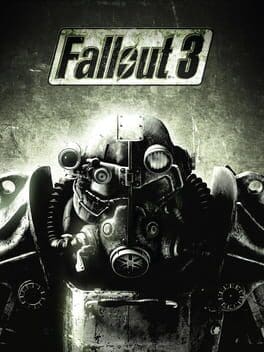
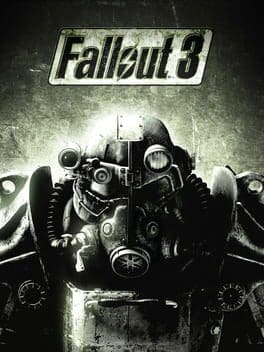
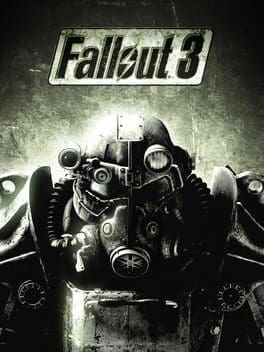
The game’s cover art, featuring a power armor trooper standing in front of a ruined urban skyline, became one of the most recognizable images in late-2000s gaming and set a visual language that subsequent Fallout titles have continued to draw from. In-game, the game’s key artwork appears throughout the Capital Wasteland in the form of pre-war posters, billboards, and corporate iconography for fictional brands such as Nuka-Cola, Vault-Tec, and RobCo.

The audio presentation is an equally important part of the game’s identity. The orchestral score by composer Inon Zur provides quiet, sparse ambient music through most of the wasteland, yielding during radio gameplay to a curated selection of licensed pre-war songs performed by artists including Billie Holiday, The Ink Spots, Cole Porter, and Danny Kaye. The juxtaposition of upbeat 1940s and 1950s popular music against a landscape of ruins became one of the most discussed artistic choices in the game and has shaped the series’ sound design in every subsequent entry.

Promotional trailers released in the lead-up to the game’s launch leaned heavily on this audio contrast, most famously setting The Ink Spots’ «I Don’t Want to Set the World on Fire» against slow pans through the ruined Capital Wasteland. The trailer became a cultural touchstone in its own right.

Franchise

Engine